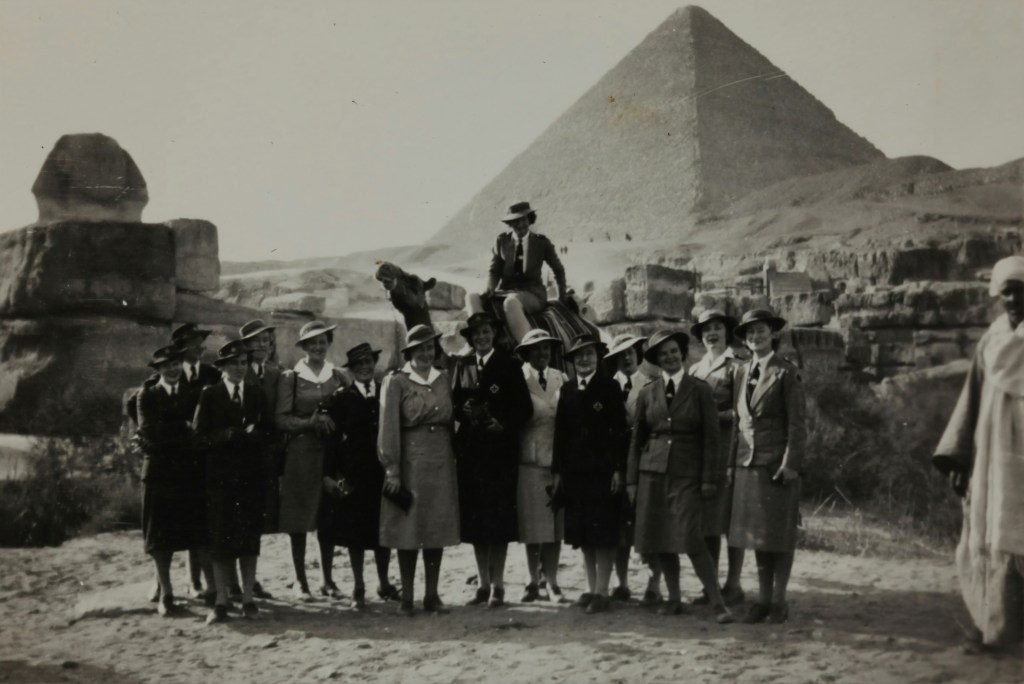
Photo by Museums Victoria on Unsplash
Is it true?
Did the slaves build the pyramids?
Let’s check it out!
The Greek historian Herodotus (c. 484–425 BCE), who wrote about the great pyramids of Giza, Egypt around 450 BCE, may have planted these perceptions. It is now considered a mix of facts, fiction, exaggeration, and folklore.
What did Herodotus say?
He said the Great Pyramid took 20 years involving 100,000 men, who worked for three-month shifts.
He opined that the workers were enslaved laborers. He also thought that the massive stones were transported using wooden sledges and ramps. He also emphasized that a massive walkway was built for transporting stones from the quarry to the construction site.
King Khufu, also named Cheops in Greek, was supposedly the man behind the construction of the Great Pyramid. King Khufu was portrayed as a tyrant to the extent that he forced his daughter into prostitution to raise funds for the pyramid is a story considered mythical.
Herodotus visited the pyramids centuries after they were built. His observations, hence, are based primarily on the stories told by his accompanies such as the guides and the priests. They were perhaps more folklore than scientific findings.
What do the modern findings reveal?
The difference of opinion was on the workforce. As against a claim of involvement of 100,000 men, the modern estimate puts it at 20,000-30,000 workers at any given time.
The primary difference in observation is about the nature of the workforce. Going by the accounts of Herodotus, who were enslaved workers has widely been debunked by archaeologists and historical researchers.
Contrarily, evidence shows that they were constructed by a highly organized workforce of skilled & seasonal laborers, and not slaves. There are pieces of evidence of villages of these workers near the pyramids, they were perhaps well-fed, housed, and were organized than was thought otherwise.
The villages included well-constructed living quarters, bakeries, breweries, and storage areas, indicating that the laborers were provided with decent living conditions and sustenance.
Further evidence revealed that the workers had a high-protein diet, including meat and fish, and were not impoverished and tortured. Evidence also shows that injuries were treated, indicating they had access to medical care.
Shreds of evidence show that they were skilled artisans, architects, and engineers along with the laborers. It further shows that many laborers were perhaps farmers who worked during the annual flood season of the Nile.
Tombs of these workers were also found near the pyramids suggesting that they were perhaps respected people and not slaves. Slaves wouldn’t have tombs (burials) around a pyramid, a sacred monument.
Enough evidence is available to show that the construction of the pyramids was an extraordinary engineering and logistical achievement. It also shows that it was carried out by a well-organized, compensated workforce.
The allegory of slave-built pyramids distorts this otherwise incredible feat of ancient engineering.

 STORYTELLER
Leave a comment