Yes, I did.
But first, what is Ikigai?
I learned about Ikigai from a writing course hosted by Ankur Warikoo called ‘Make Writing a Career.’
It’s just amazing!
On researching further, I found Ken Mogi, an authority on Ikigai, explaining it in his book, The Little Book of Ikigai. He explains Ikigai as ‘the essential Japanese way to finding your purpose in life.’ He defines Ikigai as the pleasures and meanings of life. The word consists of ‘iki’ (to live) and ‘gai’ (reason), combining them to form ‘reason to live.’
Was music my Ikigai as a child?
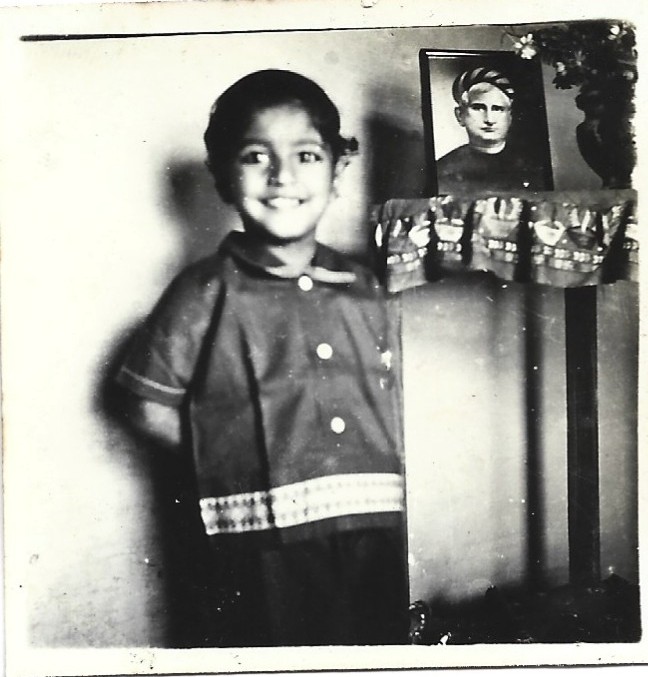
Yes, music was the reason I lived. I breathed music as a child. I don’t exactly remember at what age I started singing, but it seemed I came out humming from my mother’s womb.
We didn’t have a radio then. It was the mid-sixties, and I was (perhaps) barely 4-5 years old. I was looking for a source for songs and didn’t have any. I could quench my thrust through two channels.
The first was by accompanying my sisters to their music teacher. I would accompany them, sit in a corner quietly, listen to them singing, come back home, and repeat the same songs.
The other was by picking up songs from Hindi Movies. That was undoubtedly the golden era of Hindi Cinema Songs, with the best singers, music composers, lyricists, and accompanying musicians producing the greatest songs.
But we didn’t have a radio. I used to stand in the middle of the courtyard of our house, my head raised as if catching the airwaves. I would stand there for hours, listening to the songs and trying to imitate them, whatever I could. Once the song was again relayed later, I would fill the gaps and would generally have the songs memorized in a week or so.
A few years later, we bought a radio and a record player made by HMV (His Master’s Voice). Playing the radio was restricted, but my father was extremely fond of listening to Rabindra Sangeet (songs written by Rabindranath Tagore). I remember the LPs or the Long-Playing records running at 33 rpm (revolution per minute). The other two varieties of records ran at 48 and 75 rpm, respectively.
I picked up all the songs and would sing them at my school functions. I still have the records and the record player in workable conditions.
I remember the mesmerized faces of visitors who would listen to my songs and wonder how could a boy of such tender age sing songs so impeccably.
However, it never caught the attention of my father’s eyes (unfortunately).
As I grew up, songs remained only on my lips. My father thought I would not be able to make a living from it (music). I completed my doctoral training at the behest of my father and spent the rest of my life in research.
But I still wonder if I would have been ‘happier’ as a singer.
Bottomline:
Follow your Ikigai, your reason to live.
Make a place for yourself in the world that you will never lose.
 STORYTELLER
Leave a comment