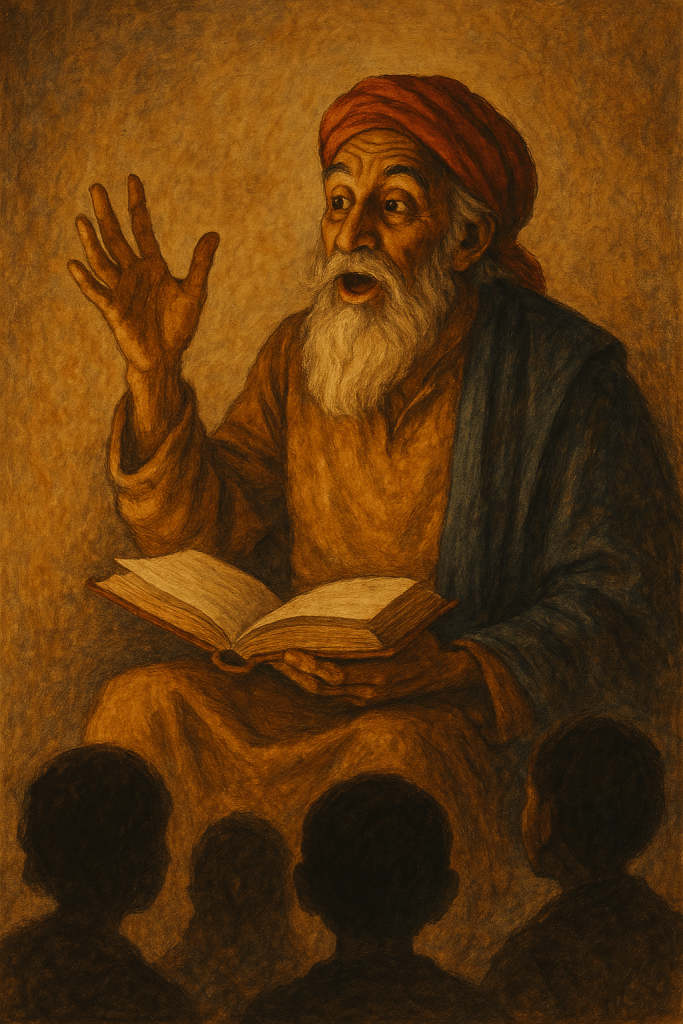
I am a storyteller, and I’m going to talk about storytelling!
All about storytelling.
Think about ‘storytelling’. What comes to your mind?
Perplexed?
Yes. It is perplexing to define ‘storytelling’ in one sentence. There are numerous definitions ascribed to storytelling in different contexts and with different connotations.
Every conversation tells a story, and every story is a conversation.
Think about it.
So, the first element of storytelling is a conversation. The conversation then multiplies, from one to two to ten to fifty to a hundred and then to millions.
This is how stories travelled in the olden days. Even today, stories travel, but the mode of transportation is different and manifold.
Stories are always contextual, from a kitty-party gossip to a journalistic scoop. They are all stories told by different people for different audiences. Hence, it is important to note that it depends on the storyteller and the target audience to set the tone and content of the story.
I tried to dive a little deeper into the history and evolution of storytelling.
When did humans start using a ‘language’ to tell a story?
The Proto-Human language is the hypothetical predecessor of all human languages. It is also known by other names such as Proto-Sapiens, Proto-World, or the Urlanguage languages (thanks to Wikipedia). Alfredo Trombetti estimated that this language was spoken between 100,000 and 200,000 years ago.
What were these guys must have been talking about?
Stories, apart from other things. Stories about hunting, about animals, about the jungle, about nature surrounding them, and about God (in their definition).
It took thousands of years for mankind to develop the first known written language. Sumerians (Mesopotamia, around 3100 BCE) and Egyptian Hieroglyphs (around 3200 BCE) were perhaps the earliest users of written languages.
The basic genres of Sumerian literature were literary catalogues, narrative/mythological compositions, historical compositions, letters and legal documents, disputation poems, proverbs, etc.
It is worth mentioning that the scripture of the Indus Valley Civilization (3300-1300 BCE) has not yet been deciphered, else it would have gotten a place among the elites.
With this, the stories were documented and passed on through generations.
But this was just the beginning!

 STORYTELLER
Leave a comment